South Yorkshire Times – Friday 18 May 1934
Gallipoli Revisited
Conisboro’ Man Takes Achi Baba
With a Camera
A Shrine of Memories
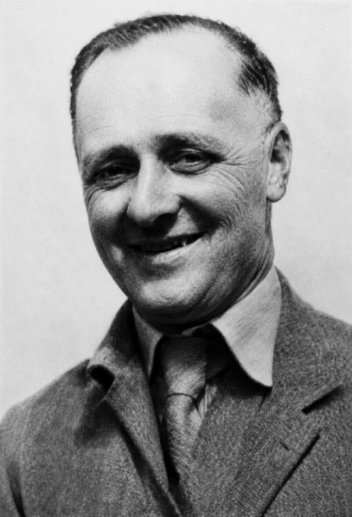
Mr. R. Dennis Blackburn has a general store in Ivanhoe Road, Conisboro’. It is not, however, Mr. Blackburn the grocer, with whom we are concerned, but Sub-Lieut. Blackburn.
When I met him the other afternoon he was looking very bronzed and fit. He smoked a Turkish cigarette, brought back from Gallipoli, where, together with a party of 700 comrades, he has revisited the battlefields.
Sub-Lieut. Blackburn was with a medical unit on the Peninsula during the campaign of 1915 and 1916, and was one of the last to quit Gallipoli. He got his commission later, his first line being at sea, on the anniversary of the first Gallipoli landing, a service was held in memory of those who fell in the campaign.
A few more days’ sailing, and the Helles memorial, where the party were later to place wreaths, rose above the horizon.
The second landing was a very happy affair. Among the Turks who gave the British rousing welcome was Mehmet Bey. During the campaign Bey was commander of the big landing by which our troops nicknamed “Asiatic Annie.”
He fired at the last party to leave Gallipoli in 1916, as they were lined up at Sedd-el-Bahr, ready to board the “Prince George,” but the 111 shell he sent failed to explode.
Sub-Lieut. Blackburn had a jolly tête-à-tête with Bey, who is now very pleased that the shell was a “dud.” The Turk was also delighted to hear that a submarine which torpedoed the “Prince George” did little damage.
Achi Baba, which we tried to take during the campaign, is now a heap of ruins, with an overgrowth of scrub. This time the lieutenant managed to take the place single-handed—with the camera.
“Looks like the top of Ilkla Moor,” he said, handing me the picture, “but the sun makes it rather uncomfortable ‘bah t’at’.”
Most of the trenches were still to be seen, and on Cape Helles Mr. Blackburn found his old dug-out. Hewn from limestone, it was in an excellent state of repair. There were ribs growing about the entrance and some debris inside, but otherwise it was exactly as he left it 18 years ago.
Certain “writings on the wall,” scratched with a nail pen-knife, were still readable. After forty winks in the “bedroom,” he came out and someone took a snap of him emerging.
“I was standing in the hospital lines not far from here,” he told the photographer, “when a time-fuse shell exploded, lodging a man thirty feet into the air. He fell on to a general service wagon, with a broken leg in only injury.”
Near by, too, was “Brown House” sector, where Mr. Blackburn helped to carry a stretcher, an officer who had come down, sick from the front line. The stretcher bearers plodded for two miles through water a yard deep, under shell fire the whole of the journey.
On reaching an aid post, the man whom they had thought unable to walk jumped easily from the stretcher and asked for a box of “numen” mines,” a corrective medicine!
Another memorable case for the medical unit was that of an Irish boy who was shot through the throat. A field surgeon gave instructions to have the wound man taken to a compound where those unlikely to recover were tended. The surgeon was convinced the boy would die, and a priest administered the last rites.
Mr. Blackburn gave his patient water. After taking a sip, he choked, and a clot of blood came from his throat.
“That’s better,” he said, and was sent back to Erin on a hospital boat and recovered.
For the comfort of the mother, who still lives in Park Road, Conisboro’, Mr. Blackburn photographed the grave of H. Curtis, A.B., who was killed in action in August, 1915, and buried in Pink Farm Cemetery.
On his way to the cemetery Mr. Blackburn was chased by six wild dogs, and had an anxious time keeping them at bay with stones.
A road has been cut through the spot where Billy’s dug-out was. Billy was a little white goat, and the lieutenant’s mascot. One of Billy’s vices was drinking; he loved rum.
Mr. Blackburn once poured out a stiff tot for himself and Louis, the cook. Mr. Blackburn “drank up,” but Louis had some little business needing his attention. When he returned to his glass he found it empty.
The surgeon came into the canteen.
“Don’t you think Billy would look better with his wool clipped, Blackburn?”
“I hadn’t thought of it, sir.”
“Well—let’s have a look at him.”
They went to seek the goat.
“Why, the beggar’s half-kettled!”
There was the goat, rolling about in a stupor.
The cook winked.
“So that’s where our rum ration goes to!”
Poor old Billy came to a sad end. When Mr. Blackburn moved “up the line,” the goat was sold to a battalion officer, who used to have him tethered to a stake.
Billy resented this indignity. He would chew the rope which held him captive, and return to his little dug-out. Not to be outwitted, the officer had two ropes fastened from Billy’s collar, one to the stake and another to the back wheel of a water cart.
Men went out before dawn for water. Billy was not noticed in the darkness, and as the cart rode away he was strangled.