
South Yorkshire Times – Saturday 4 September 1943
Home From North Africa
Denaby Tank Driver’s Impressions
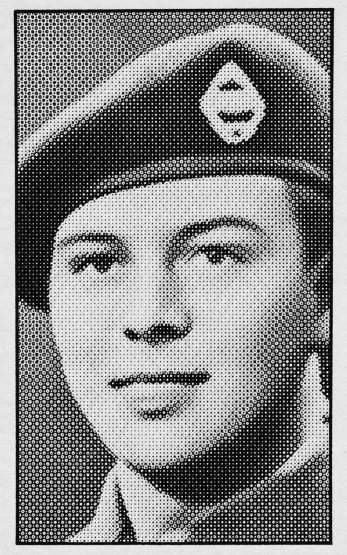
Home on leave from North Africa, where as driver since February of the tank commanded by his squadron leader and fellow Yorkshireman, Major J. E. B. Smith, partner in the firm of Messrs. Tiptaft and Smith, accountants, Mexborough, he has seen much fighting is L/cpl. John Alfred Snipe. He is spending his leave before returning to North Africa at the home of his parents-in-law, Mr. and Mrs. T. Needham, 143, Wath Road, Mexborough.
Interviewed by a “Times” reporter, L/cpl. Snipe told of some of his adventures. First he was attached to the First Army, to which he returned after a spell with the Eighth Army and the French Forces. There is hardly a place where there was fighting that he has not visited.
A use of the tank men employed to round up prisoners was to play “ring-a-ring-of-roses.” “Once we had only armour-piercing bullets left, having used our ordinary ammunition,” he said, “when we saw a German. We could not shoot at him, as he kept lying down in the grass, so we kept going round and round in a circle until we tired him out and he came and gave himself up.”
“The worst time we had was during the last two weeks. We were stuck on a ridge above Tunis unable to get out of the tanks. It was our job to prevent the German armour from getting out. Some of our lads were shell-shocked through being in the tanks from four in the morning until eight at night. The Durham Light Infantry did a fine job clearing out Germans who were laying booby traps.”
Often their squadron encountered men of the Hermann Goering Division, whose average age was about 19. One taken prisoner was only 15.
Altogether, L/cpl. Snipe rated the Germans as formidable enemies who did not stop at half measures once they got going. But most of them seemed content once they were taken prisoner; they could not believe that they would be so well treated. In contrast was the treatment of some of our lads to whom he talked. As prisoners they had been stoned by the Italians in Tunis before being set free by our forces.
Under-estimation of our strength, especially our armour, is what L/cpl. Snipe considered the biggest factor in the Axis defeat. “Jerry had a big shock when they knew we had transported them (tanks, etc.) over there,” he said.
“When we got to Tunis things were all upset. The people were short of food and it was not until our main forces came in that they were properly fed. At first the Arabs would fight over one small biscuit. All the food there was had been shipped for Germany.” By the time L/cpl. Snipe left the city normal life had been resumed.
“The French were very good to us, but the Italians gave us many black looks.” L/cpl. Snipe met a Frenchman and his wife. They were very interested in this country and the state of relations between the Allies and the French, expressing the desire to come to this country after the war. Subsequently the French lady wrote to Mrs. Snipe telling of the meeting with her husband. A piano purchased by L/cpl. Snipe and his friends for about £60 in English money provided them with entertainment while resting, and they organised their own concert parties as well as seeing troops’ shows.
“The troops out there are getting the best of everything, that is except soap, of which we have only half a pound for a week, with our own washing to do. Everybody is in good spirits; they have a job to do and they are doing it.” L/cpl. Snipe paid special tribute to the qualities of the infantry in the North African campaign.
Likening the country there to the hills of Scotland and Wales, L/cpl. Snipe said there was plenty of vegetation. He was struck by the spires and mosques of the Holy City of Kairouan. At Phillippeville he enjoyed the excellent fishing to be had and he also visited Constantine, another famous resort. He met many local lads during the campaign.
A son of Mr. and Mrs. John Snipe, 30, Ravensfield Street, Denaby, L/cpl. Snipe worked at a Conisborough grocery store before joining the Tank Corps in December, 1939.